The Hoya Rope Plant (Hoya carnosa ‘Rope’) is a stunning indoor plant known for its thick, rope-like stems and waxy, dark green leaves. Also called the “Hindu Rope Plant,” this tropical vine is popular among plant enthusiasts for its unique cascading growth and clusters of fragrant star-shaped flowers.
Hoya Rope is low-maintenance, drought-tolerant, and perfect for hanging baskets or trellises, making it an ideal choice for indoor spaces, apartments, or offices. With the right care, it can thrive for years, producing not only lush foliage but also spectacular blooms.
Here’s your expert guide to caring for the Hoya Rope Plant.
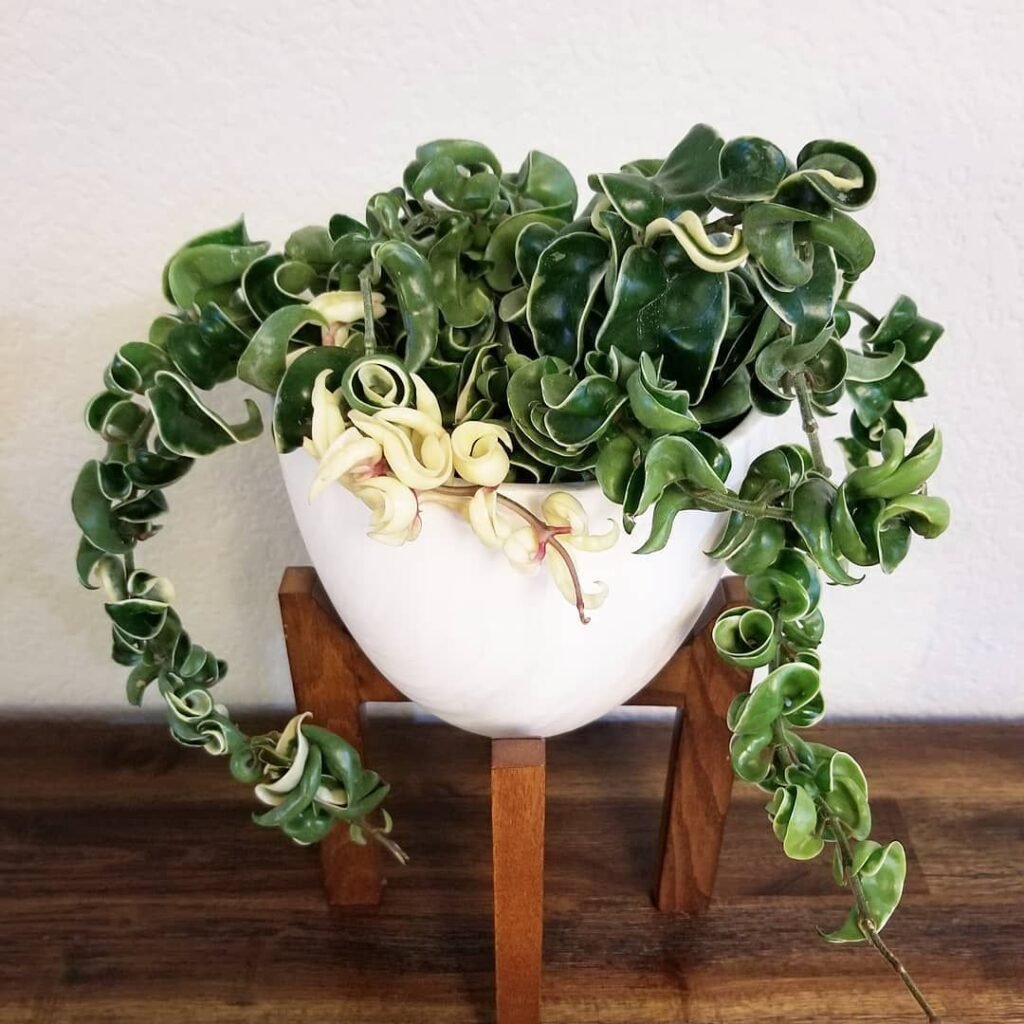
Table of Contents
🌞 Light Requirements
Hoya Rope plants love bright, indirect light, which encourages healthy growth and flowering.
- Ideal: Near an east- or south-facing window with filtered sunlight.
- Too little light: Leads to slow growth, fewer blooms, and pale leaves.
- Direct sunlight: Avoid harsh midday rays, which can scorch the leaves.
💡 Tip: If grown indoors under low light, consider supplementing with LED grow lights.
💧 Watering Needs
Hoya Rope is succulent-like, storing water in its thick stems, so it prefers infrequent watering.
- Allow the top 1–2 inches of soil to dry out before watering.
- During the growing season (spring and summer), water every 1–2 weeks depending on humidity.
- In winter, reduce watering significantly—sometimes only once a month.
⚠️ Overwatering is the main cause of root rot in Hoya plants. Always ensure excess water drains freely.
🌱 Soil Requirements
Hoya Rope thrives in well-draining, airy soil that prevents waterlogging.
- Recommended mix: 1 part potting soil + 1 part orchid bark + 1 part perlite.
- Avoid dense, clay-heavy soil that traps moisture.
- Slightly acidic to neutral soil (pH 6.0–7.0) is ideal.
🌡️ Temperature and Humidity
Being a tropical plant, Hoya Rope prefers warmth and moderate humidity.
- Temperature: 60–85°F (16–29°C)
- Humidity: 40–60% is sufficient, but it tolerates lower indoor humidity.
- Protect from cold drafts and sudden temperature changes.
💡 Tip: Placing it in a bathroom or kitchen can naturally increase humidity.
🌸 Fertilizing Routine
Feeding encourages lush growth and flowering.
- Use a balanced liquid fertilizer (10-10-10) or a fertilizer for flowering plants.
- Fertilize every 4–6 weeks during spring and summer.
- Stop fertilizing in fall and winter when the plant slows down.
✂️ Pruning and Maintenance
- Prune only to remove dead stems or shape the plant; Hoyas prefer their long, rope-like vines.
- Never remove the small brown nodes along the stem, as these are potential flower sites.
- Wipe leaves occasionally to remove dust and allow better photosynthesis.
🌱 Propagation
Hoya Rope plants propagate easily via stem cuttings:
- Cut a healthy stem with at least 2–3 nodes.
- Allow the cutting to air dry for a day or two.
- Plant in moist, well-draining soil or place in water.
- Roots develop in 3–6 weeks, after which it can be transferred to a pot.
⚠️ Common Problems and Solutions
- Yellowing leaves: Often caused by overwatering. Let soil dry before watering again.
- Slow growth: May indicate insufficient light. Move closer to bright indirect sunlight.
- Root rot: Caused by waterlogged soil. Repot in fresh, well-draining mix.
- Pests (mealybugs, spider mites, aphids): Wipe leaves with neem oil or insecticidal soap.
🌟 Benefits of Hoya Rope Plant
- Beautiful, cascading vines make it perfect for hanging baskets and shelves.
- Produces fragrant star-shaped flowers that attract attention.
- Low-maintenance and drought-tolerant, ideal for beginners.
- Adds a tropical, elegant touch to homes and offices.
🪴 Final Thoughts
The Hoya Rope Plant (Hoya carnosa ‘Rope’) is a versatile and stunning plant for both beginners and seasoned indoor gardeners. With the right combination of bright indirect light, infrequent watering, well-draining soil, and occasional feeding, your Hoya Rope can flourish for years.
Its cascading vines, unique rope-like texture, and potential for fragrant blooms make it a must-have indoor tropical plant. Perfect for homes, offices, or indoor gardens, the Hoya Rope adds elegance and life wherever it grows.