
The Rattlesnake Plant (Calathea lancifolia) is one of the most stunning and unique houseplants you can bring into your home. Known for its vibrant, patterned leaves that resemble the markings of a rattlesnake, this tropical plant is admired for its bold beauty and graceful movement — its leaves open in the morning and close at night, following the rhythm of light.
Native to the rainforests of Brazil, the Rattlesnake Plant is part of the Calathea family, known for being slightly finicky but deeply rewarding when cared for properly. With the right balance of light, humidity, and watering, it can thrive indoors and add an exotic touch to your home décor.
In this detailed guide, we’ll cover everything you need to know to help your Calathea lancifolia flourish — from light and soil requirements to common problems and solutions.
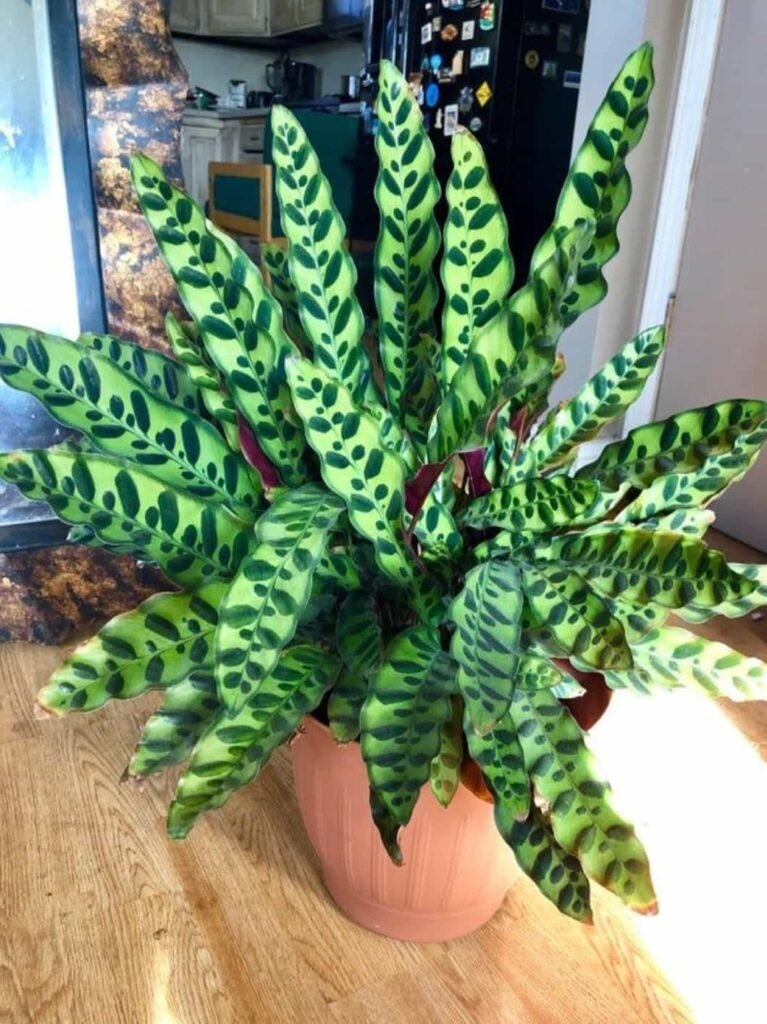
Table of Contents
🌞 Light Requirements
Rattlesnake Plants thrive in bright, indirect light — similar to what they’d receive on the forest floor beneath a canopy of trees.
- Ideal placement: Near an east- or north-facing window with filtered sunlight.
- Avoid direct sunlight: Harsh rays can scorch the leaves and fade their distinctive patterns.
- Low light tolerance: They can survive in low light, but growth may slow down.
💡 Tip: If your plant’s leaves start to lose colour, it may need slightly more light.
💧 Watering the Rattlesnake Plant
Water is critical for Calatheas, and the Rattlesnake Plant is no exception. These plants love consistently moist soil but not soggy roots.
- Watering schedule: Water once the top inch of soil begins to dry out.
- Use room-temperature, filtered, or rainwater — tap water with fluoride or chlorine can cause leaf edges to brown.
- Reduce watering frequency slightly during the cooler months.
⚠️ Overwatering can lead to root rot, while underwatering will cause the leaves to curl and dry out.
🌱 Soil Requirements
Rattlesnake Plants prefer light, well-draining soil that holds some moisture without becoming compacted.
- The best mix: 2 parts peat or coco coir, 1 part perlite, and 1 part potting soil.
- Adding orchid bark or a small amount of compost improves aeration and nutrients.
- Ensure the pot has good drainage holes to prevent waterlogging.
🌡️ Temperature & Humidity
These tropical plants demand warm and humid conditions to thrive.
- Temperature: Keep between 65°F and 80°F (18°C–27°C). Avoid temperatures below 60°F (15°C).
- Humidity: High humidity (above 50%) is essential. Mist your plant regularly, use a humidifier, or place it near other plants.
- Avoid cold drafts, heaters, and air conditioners that can dry out the air.
💧 Pro Tip: A humidity tray with water and pebbles can work wonders for your Calathea.
🌸 Fertilizing the Rattlesnake Plant
Feed your plant during the growing season (spring and summer) for lush, vibrant foliage.
- Use a balanced, water-soluble fertilizer (10-10-10) diluted to half strength.
- Apply once every 4–6 weeks.
- Avoid overfertilizing — too many nutrients can burn the roots and dull leaf colors.
✂️ Pruning & Maintenance
Rattlesnake Plants are low-maintenance when it comes to pruning.
- Trim away yellowed or browned leaves to keep the plant looking tidy.
- Use clean, sharp scissors to prevent the spread of disease.
- Wipe the leaves occasionally with a damp cloth to remove dust and keep them glossy.
🌸 Repotting
Repot your Rattlesnake Plant every 1–2 years, or when roots start to outgrow the pot.
- Choose a pot 1–2 inches larger than the current one.
- Repot during spring or early summer for best results.
- Always refresh the soil to replenish nutrients.
🌿 Propagation
Calatheas are propagated by division during repotting.
- Gently remove the plant from its pot and separate a small section of the root clump with several leaves attached.
- Replant the division in a fresh pot with moist soil.
- Keep it in a warm, humid environment until it establishes new growth.
⚠️ Common Problems & Solutions
- Brown leaf edges: Usually caused by dry air or tap water chemicals. Use filtered water and increase humidity.
- Curling leaves: A sign of underwatering or low humidity. Mist or water the plant thoroughly.
- Yellow leaves: Overwatering or poor drainage. Allow soil to dry slightly before watering again.
- Faded leaf patterns: Too much direct sunlight. Move the plant to a shadier location.
🌸 Benefits of Rattlesnake Plant
- Air purification: Filters toxins and improves indoor air quality.
- Pet-friendly: Non-toxic to cats and dogs.
- Visual appeal: Unique patterns and movement make it a centerpiece in any room.
- Stress relief: Caring for this plant encourages mindfulness and calmness.
🌟 Final Thoughts
The Rattlesnake Plant (Calathea lancifolia) is a showstopper with personality and elegance. While it can be a little demanding, the effort is well worth it. By providing the right amount of light, moisture, warmth, and humidity, you’ll enjoy its mesmerizing leaves for years to come.
This tropical gem brings a touch of the rainforest indoors — a living reminder of nature’s beauty and rhythm. With patience and consistent care, your Rattlesnake Plant will flourish, standing tall as one of the most enchanting members of your indoor garden. 🌿